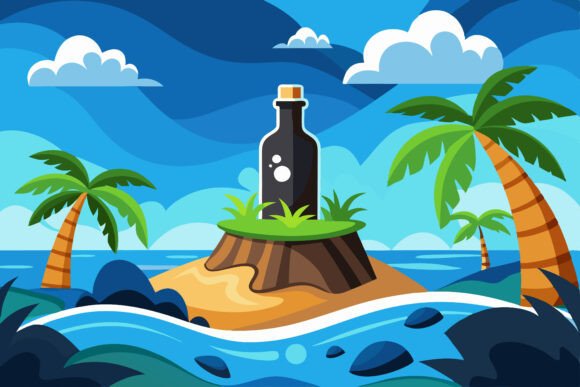
Lost Island in Ocean: Visual Storytelling Power for Your Projects
The image of a solitary speck of land adrift in endless blue water is almost universally captivating. The Lost Island in Ocean concept isn’t just a pretty picture—it’s a deep narrative tool that speaks to discovery, isolation, resilience, and the unknown. For anyone who creates presentations, blog posts, app interfaces, or marketing materials, having access to a meticulously crafted visual like this can instantly elevate a message. But not all illustrations are ready for real-world work. That’s where a specialized collection, like the one built around Hello Welcome to our Special AI EPS Collections, turns a good idea into a dependable daily resource.
This discussion isn’t about adding more clutter to your hard drive. It’s about understanding why a specific visual asset—available in smart, editable formats—can save hours, sharpen your communication, and give your design work a consistent professional feel without starting from scratch every time.
Why a Lost Island in Ocean Scene Connects So Quickly
Visual metaphors bypass logical resistance. When someone sees a Lost Island in Ocean, they don’t just note the shapes and colors. They feel solitude, opportunity, or a fresh start. This makes the illustration incredibly useful for a wide range of topics. A business coach might use it to represent an untouched market niche. A tech blogger could frame it as a data treasure waiting to be discovered. An app developer may rely on the image to symbolize a private, secure space within a digital ocean of noise. The illustration doesn’t just decorate—it reinforces the core idea before a single sentence is read.
What makes a pre-made asset stand out is how flexibly it adapts to these different contexts. If the file is locked or the colors clash with your brand palette, that emotional punch diminishes. This is exactly where the structure of a well-organized AI EPS illustration set becomes critical. You are not stuck with someone else’s vision; you get a starting point that respects your professional judgment.
The Real Advantage of a Smarter Illustration File
Many designers and non-designers alike have downloaded “free” graphics only to find them impossible to edit, poorly layered, or unusable at print resolution. The Hello Welcome collection addresses these pain points head-on by focusing on how the files are built, not just what they look like. The inclusion of AI EPS and a high-quality JPG preview gives you both the raw editable vector and an immediate raster reference. This dual format approach means you can drop the JPG into a draft layout in seconds, then switch to the vector source when it’s time to refine.
The neat organization of files and layers matters more than you might think. A Lost Island in Ocean illustration might have separate layers for the sky gradient, ocean ripples, palm trees, sandy shore, and distant birds. When layers are clearly named and logically grouped, you can isolate the island silhouette to change its hue, remove the tree for a minimalist version, or even combine it with other elements without losing your afternoon to hunting for anchor points. This level of control is what transforms a stock graphic into a true design asset.
Detail Consistency That Holds Up Under Pressure
In a team setting or across a multi-page document, consistency is non-negotiable. One blurry icon among crisp ones looks sloppy. The precision in these illustrations means the line weights, shading style, and level of abstraction remain uniform. If you pull the Lost Island in Ocean into an infographic and also use other icons from the set for navigation, timelines, or categories, everything looks intentionally designed together. This kind of coherence saves you from having to manually fix mismatched styles later.
For print projects, detail consistency includes proper handling of CMYK color profiles and bleed-safe edges. For web and app interfaces, pixel-perfect alignment on a grid matters. The file’s attention to detail in its construction means you can confidently scale the illustration from a tiny app icon up to a large trade show banner without worrying about degradation, sagging curves, or uneven strokes.
Cross-Platform Confidence for Mac and Windows Users
Creative work flows across devices and operating systems. A freelancer might sketch a layout on a Windows laptop, collaborate with a Mac-based illustrator, and then hand off final files to a client using web apps. The fact that the AI EPS collection is designed explicitly for both environments removes a common friction point. The EPS format acts as a universal vector interchange, while the native AI file preserves all layer structures and editability for Adobe Illustrator users. This cross-platform readiness means you aren’t locked into a single ecosystem, and you can share files with colleagues without exporting or converting to less flexible formats.
Editability That Adapts to Your Brand Language
One of the most practical benefits touted by users of such collections is the ability to change colors and modify icons easily. For the Lost Island in Ocean illustration, this is incredibly valuable. Maybe your brand uses a warm coral and deep teal palette. With a few clicks, you can recolor the ocean, adjust the sand tone, and tint the vegetation—all while keeping the lighting and shading relationships intact. If you need to simplify the scene for a minimalist logo mark, you can strip away details down to the basic outline. If a presentation calls for a nighttime mood, you can shift the sky gradient and add stars. This kind of flexibility means you can reshape the same core visual for email headers, social posts, slide decks, and printed reports, creating a consistent narrative thread without paying for or hunting for new versions.
Who Gets the Most Mileage from This Collection
The obvious answer is graphic designers, but that only scratches the surface. Entrepreneurs and small business owners who handle their own marketing often lack the time to create original vector art, yet they need professional visuals for product pages, pitch decks, and Facebook ads. The Lost Island in Ocean can anchor a travel blog header, illustrate a meditation app’s onboarding screen, or symbolize a business strategy concept in a white paper. Educators preparing course slides or handouts will appreciate how quickly they can adapt the illustration to match a lesson theme without worrying about copyright issues or low-resolution blurs.
Publishers and bloggers working on article featured images gain a distinctive asset that stands out from typical stock photo clichés. Infographic creators targeting topics like climate change, ocean conservation, remote work, or personal growth can use the island as a powerful central graphic. Even software developers adding a “no data” or “explore” empty state to a mobile app can repurpose a simplified version of the scene. The key is that you don’t need a design degree to make meaningful changes—just a basic familiarity with vector editing software, and even free tools can open EPS files.
Practical Applications: Print, Web, Symbols, Apps, and Infographics
The suitability of the illustration for so many mediums isn’t accidental. A well-built vector file shines across use cases:
- Print materials: Brochures, flyers, book covers, and posters benefit from the ability to scale without pixelation. The clean layer organization also helps prepress professionals separate elements if needed.
- Web and social media: The JPG preview gives instant web-ready output, while the AI file lets you export perfected SVGs or PNGs for responsive sites at exact dimensions.
- App interfaces: Icons, splash screens, and empty state illustrations gain a premium polish when you can adjust line thickness and colors to match your UI kit.
- Symbols and icon sets: By extracting just the island silhouette or a palm tree, you can create a matching icon family for navigation or bullet points.
- Infographics: The narrative quality of a lost island helps explain abstract data—think market isolation, resource availability, or community ecosystems—giving viewers an anchor point that numbers alone can’t provide.
Because the files are so thoroughly built, you aren’t locked into a single usage style. The same asset can be soft and watercolor-like for a wellness blog or crisp and geometric for a tech startup’s analytics dashboard. The choice sits with you, not the original artist.
Streamlined Workflow: From Download to Deployment
Time isn’t just money; it’s creative energy. When a deadline looms, you don’t want to untangle 50 unnamed layers or redraw a wobbly coastline. The collection’s promise of a neat file structure means you can open the document, immediately understand its anatomy, and make targeted edits. This is especially helpful during client revision rounds. If a client says, “We love the island but can you remove the tree and make the water more turquoise?” you can deliver that change in moments. The ability to respond quickly strengthens your professional reputation and reduces project fatigue.
Additionally, having both the AI and EPS formats protects your investment. If you switch design tools, systems, or collaborators, the EPS ensures backward and forward compatibility. The included JPG serves as a quick thumbnail for file browsers and presentation drafts, so you don’t need to open a heavy vector program just to see what you have.
A Few Honest Considerations
While this type of illustration set is robust, it’s wise to match expectations. The Lost Island in Ocean artwork is pre-constructed, meaning its fundamental composition is fixed. If you need a radically different angle—say, an aerial photo-realistic view or a specific historical map style—a single vector drawing may not suffice. In those cases, treat the illustration as a strong base to combine with other elements rather than a total solution. Also, beginners should note that deep editing requires at least a passing familiarity with vector software like Illustrator, Affinity Designer, or Inkscape. While editing colors and removing objects is straightforward, adding complex new shapes may take practice.
For users who primarily work with raster images, the JPG alone might be enough, but you’d be missing out on the long-term value. It’s like owning a sports car and only ever driving in first gear. Taking half an hour to learn basic vector editing unlocks the full potential of every purchase. Many tutorials exist, and the reward is a reusable skill that elevates every future design task.
Embedding the Lost Island in a Coherent Visual Strategy
Smart creatives don’t use illustrations in isolation. They repeat visual themes across projects to build recognition. If you choose the Lost Island in Ocean for a blog series, consider pulling its color palette into your chart accents, using its line style for custom icons, or echoing its circular island shape in badges and call-to-action buttons. The consistency of the AI EPS collection makes this easy because you know the same level of detail and organization awaits in every file you pull from the set. You aren’t mixing mismatched assets from multiple sources, which often leads to a disjointed look.
For those selling physical products, the illustration could appear on packaging inserts, instruction manuals, or thank-you cards. Service providers might project the island imagery during webinars as a symbolic backdrop. The more you reuse a cohesive graphic system, the more your audience subconsciously associates your message with that calm, focused feeling the island inspires.
Making the Most of Your Creative Budget
Stock subscriptions and custom commissions can get expensive. A one-time purchase of a specialized set that includes a scene as evocative as the Lost Island hands you a legal, high-quality visual that doesn’t expire. No recurring fees, no usage caps. This is particularly valuable for educators and nonprofit organizations that need to stretch resources while maintaining a polished public face. The immediate availability of the download—once you decide to bring the collection into your toolkit—means you can go from concept to published asset in a single day, a pace that paid campaigns often demand.
The convergence of detailed design, intelligent file structure, and broad applicability makes this specific illustration more than a trendy graphic. It’s a problem-solver that fits into multiple creative pipelines without demanding you change tools or compromise on finish quality. Whether you shape it into the hero image of a crowdfunding page or a subtle wallpaper for a meditation timer, the result feels intentional and tailored.