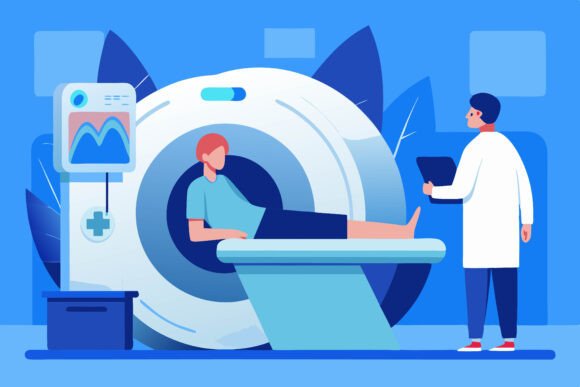
The Value of High-Quality Doctor Illustrations in Today’s Visual World
Clear, trustworthy visuals have never been more important in healthcare communication. Whether you are designing a patient education leaflet, a telemedicine app interface, a blog post about medical topics, or a clinic’s brand identity, the imagery you choose directly shapes how people perceive the message. Among the many options available, well-crafted doctor illustrations strike a unique balance between professionalism and approachability. They can soften clinical seriousness without sacrificing accuracy, and they offer a universal visual language that transcends cultural and linguistic boundaries. It is no surprise that demand for thoughtfully designed medical vector art has grown steadily, paralleling the expansion of digital health platforms and the public’s increasing appetite for reliable health information online.
Our special AI EPS collection centered on the Doctors theme was created exactly for this moment. It is not simply a bundle of clip art; it is a carefully organized resource built for anyone who needs polished, editable illustrations that adapt to a wide range of projects. The collection acknowledges that medical imagery must convey calm competence, and it does so through consistent details—the clean lines of a stethoscope, the focused expression of a physician, the recognizable silhouettes of medical professionals in everyday scenarios. These small visual cues reassure viewers and help establish credibility, which is essential whether you are a marketer for a wellness startup or a teacher building health literacy materials.
Why Vector Art Matters for Healthcare Projects
Raster images have their place, but when you need to scale a graphic from a mobile screen to a large poster without losing clarity, vector files become indispensable. Every element in a vector illustration is defined mathematically, so resizing is lossless. For medical and health-related applications, this characteristic is not just a convenience—it often determines whether a graphic looks professional or pixelated across devices. Our Doctors set delivers precisely this advantage: it includes AI (Adobe Illustrator) and EPS formats, which are industry-standard vectors, alongside a high-resolution JPG version for quick placement. This combination means you can use the same doctor illustration in a printed brochure, on a high-density retina screen, as part of an app icon, and within an infographic, all while maintaining crisp edges and faithful color rendering.
People often underestimate the time saved by starting with well-structured files. Each illustration in the collection has a neat, logical layer organization. Instead of wrestling with a flattened graphic, you can open the file and immediately isolate, rearrange, or hide components. Need to remove the background to place a doctor figure on a custom setting? It is a matter of a few clicks. Want to adjust the shape of a medical tool or tweak the doctor’s posture slightly? The layered structure turns what could be a tedious task into a straightforward design step. This level of control matters enormously for creators who value precision but face tight deadlines.
Perfection in Details That Speak Clearly
When you look closely at medical illustrations, the difference between generic and premium artwork becomes obvious. Subtle gradients on a lab coat, the correct proportion of a reflex hammer, the natural positioning of hands during an examination—these are the elements that separate a believable image from one that feels off. Our Doctors collection was built with an obsessive attention to such details. Every character, symbol, and scene went through rounds of refinement to ensure anatomical plausibility, contemporary attire, and a universally friendly aesthetic. Consistency across the set is another hallmark: when you use multiple illustrations from the same collection in a presentation or a website, they share a common visual language. Line weights, shading styles, and color palettes harmonize, so your project feels cohesive rather than pieced together from unrelated sources.
This harmony is especially valuable for businesses and educators who need to build a recognizable visual brand. A health app that uses mismatched icons can inadvertently project disorganization. In contrast, a set of doctor illustrations with perfect detail and consistent styling conveys reliability, an attribute that directly aligns with what patients and users seek in healthcare services. The collection therefore functions as more than decoration; it becomes a strategic asset for communicating trust.
Seamless Workflow Across Mac and Windows
Design teams rarely work on a single platform. You might be sketching on a Mac and later refining vectors on a Windows machine, or you could be sharing files with collaborators who use different operating systems. We designed this AI EPS package to be truly cross-platform, eliminating compatibility friction. The EPS files are universally accepted by design software from Adobe Creative Cloud to open-source alternatives, and the JPG files work as a fallback in any environment. There is no proprietary lock-in, no tedious conversion process. Just download and open, whether you are editing in Illustrator, Affinity Designer, CorelDRAW, or Sketch. This emphasis on accessibility reflects how distributed creation has become the norm, not the exception.
Editable and Adaptable: Make Each Graphic Truly Yours
One of the most frustrating limitations of conventional stock images is rigidity. A photo of a doctor might depict the wrong gender, age group, or uniform color for your audience, and correcting those aspects is often impossible without advanced retouching skills. Vector illustrations flip that dynamic completely. Our Doctors illustrations are built from editable shapes and paths. You can recolor scrubs to match your brand palette with a few clicks. You can modify facial features, adjust skin tones to represent diverse populations, or swap out medical props to better fit the context—turning a general practitioner vector into a pediatrician or a lab technician with minimal effort. This flexibility empowers small businesses and solo creators who may not have the budget for custom illustration but still require tailored visuals.
Changing colors is not just about aesthetics; it serves practical communication goals. For instance, a wellness coaching platform might need warm, gentle tones, while a hospital emergency guide benefits from high-contrast, alert colors. Because the files are editable, you are not locked into the original color scheme. Similarly, you can extract individual icons or symbols—like a heart, a caduceus, or a vaccination symbol—and use them as standalone elements in apps, websites, or data dashboards. The modular nature of the artwork multiplies its usefulness far beyond the initial download.
Where Doctor Illustrations Shine: Print, Web, Apps, and Infographics
The versatility of this collection stems from its dual file delivery and its conceptual breadth. In print, the clean vectors ensure that large banners, pamphlets, and waiting room posters reproduce sharply. For web use, you can export them as SVGs or optimized PNGs, knowing that the source art supports any screen resolution. App designers benefit from the symbolic clarity of the doctor icons; whether as navigation elements in a telemedicine interface or explanatory visuals in a symptom checker, the illustrations help users navigate complex health information intuitively.
Infographics represent perhaps the most natural home for these graphics. Medical data—vaccination rates, specialist counts, patient satisfaction scores—can feel abstract when presented alone. A well-placed doctor silhouette or an illustrative scene of a consultation humanizes the numbers and creates a stronger cognitive anchor. Editors, marketers, and journalists who regularly produce health content will find that these assets save hours of searching and let them maintain a higher standard of visual storytelling. The organized file structure also makes it simple to assemble composite infographics: pull a doctor from one file, a patient from another, add some data visualization elements, and export exactly what you need.
A Forward-Looking Resource for a Changing Health Communication Landscape
The way we access health services and information has shifted permanently. Telehealth consultations, health literacy apps, remote patient monitoring dashboards, and AI-driven symptom analysis tools all rely on interface design that makes users feel safe and informed. In these digital spaces, medical illustration plays a quiet but critical role. It bridges the gap between the clinical and the human. As augmented reality and virtual reality slowly find their way into medical training and patient education, libraries of editable vector graphics will serve as building blocks for immersive experiences. Investing in a high-quality, flexible doctor illustration set today is, in many ways, preparing for tomorrow’s communication channels.
At the same time, the move toward inclusive and representative imagery is shaping how health content is produced. The ability to edit the base illustrations—changing skin tones, body types, and contexts—allows users to create visuals that resonate with specific communities. This is not merely a design trend; it is an ethical imperative in healthcare, where representation can directly influence trust and engagement. Our Doctors collection gives you that starting point, with open, editable artwork that you can adapt without permission or additional licensing hurdles.
Practical Ways to Integrate Doctor Illustrations into Your Projects
To make the most of this AI EPS set, start by identifying the central message you want to convey. If it’s about preventive care, select doctor illustrations that show consultations or health checks rather than acute treatment scenes. For a medical directory app, the symbols and icons within the collection can simplify navigation. Take advantage of the layer structure to build scene depth: place a doctor in the foreground, blur a clinic background slightly, and overlay crisp textual information. The result is a professional composition that would normally require hours of design work, yet comes together rapidly because the foundational art is already meticulously prepared.
Another practical recommendation is to develop a color palette document for your brand or project and systematically recolor illustrations to align with it. This small up-front investment pays off every time you create new content. Because the files are vector, you can also combine multiple illustrations to depict complex workflows—ideal for explainer videos or e-learning modules that walk users through a patient journey or a clinical procedure. The consistency of details across the set means the combined images won’t clash, preserving a polished look.
For freelancers and entrepreneurs, speed and reliability are currency. Being able to reach into a neatly organized folder of doctor illustrations, grab the exact graphic you need, tweak it, and deliver it to a client rapidly enhances your reputation as a resourceful professional. The files are built to be robust and straightforward, so you spend less time troubleshooting and more time creating.
What Sets This Collection Apart in a Crowded Market
Stock vector marketplaces are saturated with medical imagery, but many offerings feel generic or technically underwhelming. Hidden issues—poorly closed paths, inconsistent stroke widths, merged layers that prevent meaningful editing—often surface only after purchase. Our AI EPS Doctors collection was constructed with a different philosophy: treat each file as a professional design document, not a throwaway graphic. The layering is intentional, the grouping logical, and the artboards sized to common standards. Whether you are a seasoned designer or a business owner picking up Illustrator for the first time, the learning curve is minimal. The file includes JPG for instant use, but the real power sits in the editable vector originals.
Additionally, the balance between detail and simplicity is carefully calibrated. Too much realistic texture can make vectors feel dated, while overly minimalist stick-figure styles lack the gravitas needed for serious health topics. The doctors in this collection strike the right tone—recognizable as competent medical professionals but rendered with a warmth that disarms anxiety. This is especially important for sensitive subjects like mental health, pediatrics, or chronic disease management, where the wrong visual can alienate the very people you hope to help.
So what are you waiting for? Whether you are revamping a health blog, launching a patient portal, creating workshop materials, or designing that next viral infographic, the right visual tools are within reach. This is not just a set of illustrations; it is a practical bridge between your creative vision and polished, credible output. Download the collection, open an AI or EPS file, and discover personally how quickly you can transform a blank canvas into a compelling health message. The seamless cross-platform compatibility, the perfection in every detail, and the freedom to edit and recolor with ease are all ready for you. Embrace the opportunity to elevate your visual communication with doctor illustrations that truly work as hard as you do.